VENOUS STASIS DISEASE (CVI)

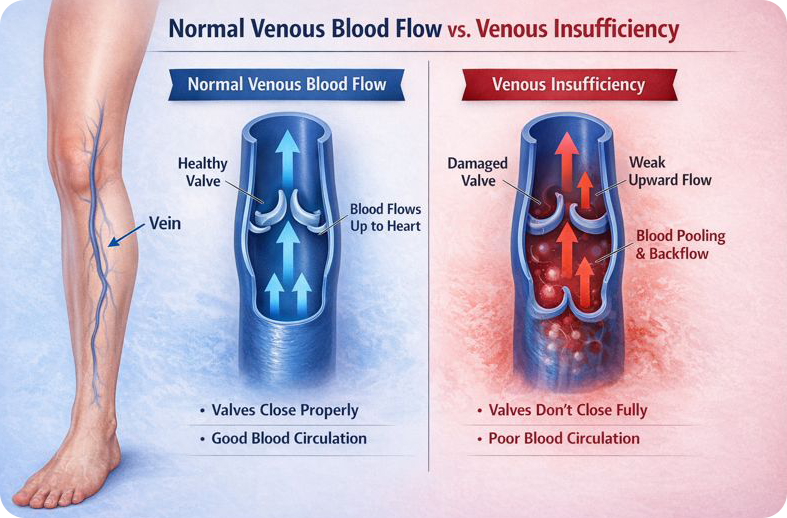
What is it?

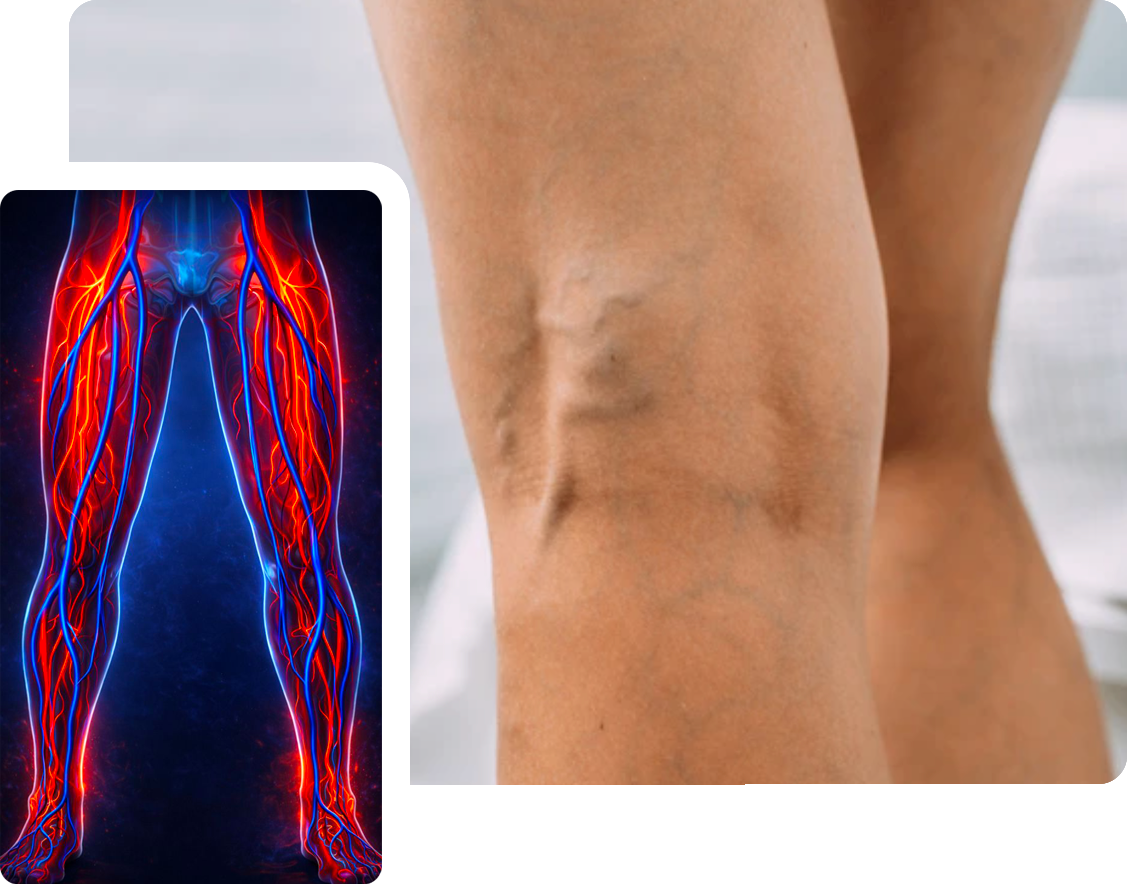
What are the symptoms?

What are risk factors for venous insufficiency and varicose veins?

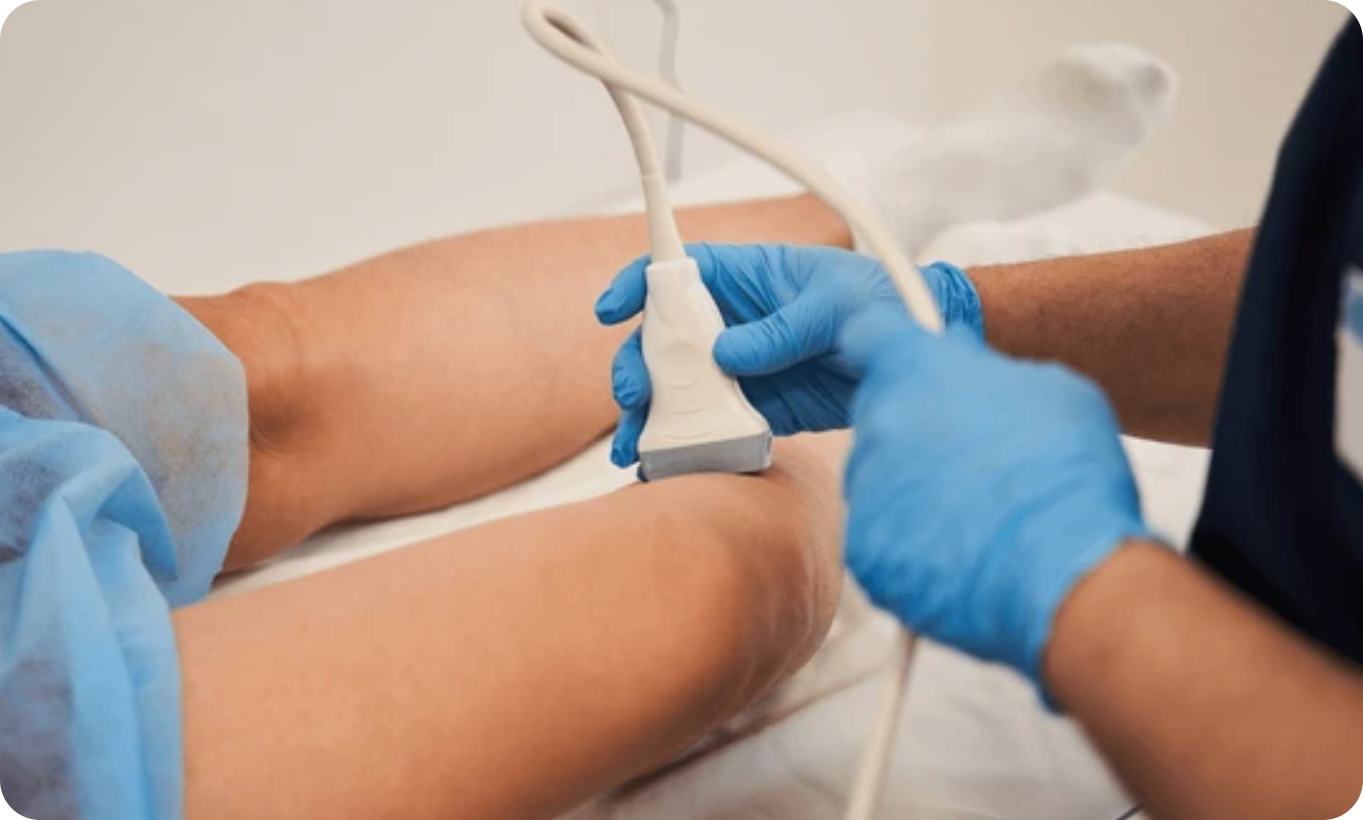
How is Chronic Venous Insufficiency (CVI) diagnosed?

How is CVI Treated?

MAY-THURNER SYNDROME

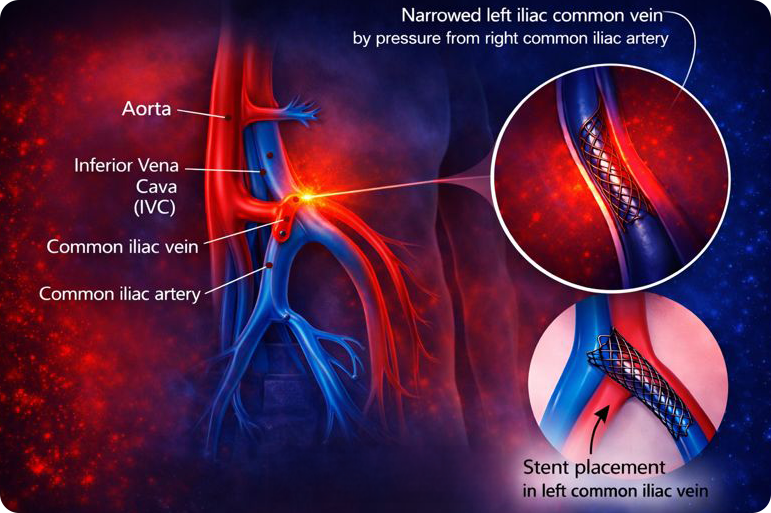
The anatomy of arteries and veins in the pelvis can result in compression of a vein by the nearby artery. In May-Thurner Syndrome, the Left Iliac Vein is compressed between the adjacent artery and the spine, damaging and narrowing the vein.

Symptoms:
• Left leg pain and swelling
• Pain in pelvis or groin
• Sudden blood clot development can
cause sudden left pain and swelling

Diagnosis:
• Evaluation by a vascular specialist
• May be identified on ultrasound
• Often best seen on CT venogram

Treatment:
• Venogram is performed by placing a catheter through a vein in the upper leg and injecting x-ray dye (contrast)
• An ultrasound catheter is used inside the vein to obtain measurements
• A stent is placed to open the vein and restore blood return from the left leg to the heart

Request an Evaluation

If you are experiencing symptoms of PAD or are concerned about your vascular health, 

[Request an Evaluation] to schedule an appointment. Early detection and treatment are key to managing PAD and

preventing further complications.